Ergonomics is about designing work and tools to support the human body, reducing strain, fatigue, and long-term injury from repetitive tasks. Housekeepers in hotels face a lot of physical stress on the job due to the heavy lifting they do, bending over, stretching up high, and making beds many times a day. Among these tasks, bed handling is one of the most physically demanding and fatigue-driving activities.
In this article, we will outline the importance of ergonomics in housekeeping and demonstrate how the Atkinson BedLift can replace traditional manual bed handling to improve safety.
Why Manual Bed Handling is a Problem
When making beds, housekeepers repeatedly apply manual force in awkward positions, placing stress on their bodies. The process of making a bed does not involve lifting a complete bed, but housekeepers will handle the corners and edges of the mattress multiple times (to change sheets, clean under the bed and tuck up the linens) for each bed they make during a shift, in addition to lifting the bedding over the corners and edges of the beds.
Common physical challenges include:
- Repetitive handling of heavy mattress edges during sheet changes
- Frequent bending and reaching to tuck corners and access under-bed areas
- Awkward body positions caused by tight room layouts and fixed bed heights
- Fatigue accumulation occurs as the same motions are repeated throughout the shift
As you perform bed handling over and over, fatigue builds and causes discomfort, lowering stamina and increasing stress-related musculoskeletal injuries from the physical strain of continuously performing repetitive tasks, such as back pain, shoulder pain, and wrist pain.
While bed handling may be considered a commonplace/variable task, the frequency of its occurrence and the minimal recovery time between lifts significantly impact its ergonomics.
Safer Alternatives to Manual Bed Handling
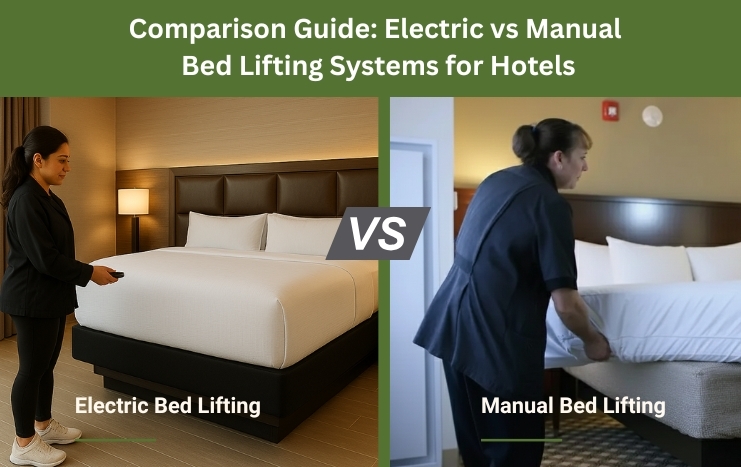
Electric and spring-assisted bed lift systems reduce strain during bed handling by raising the bed to an ergonomic working height, minimizing bending and awkward body postures.
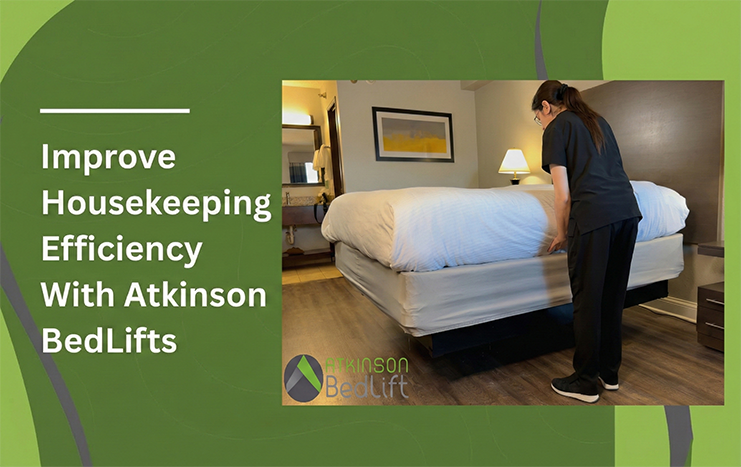
One of the most effective ways to improve ergonomics during bed handling is the use of Atkinson BedLift. The bed-lifting systems described above can be installed under a hotel’s current beds, raising the bed up to 12 inches, thus allowing a safer, more comfortable working height for housekeepers to perform their tasks during bed-making and when cleaning beneath beds.
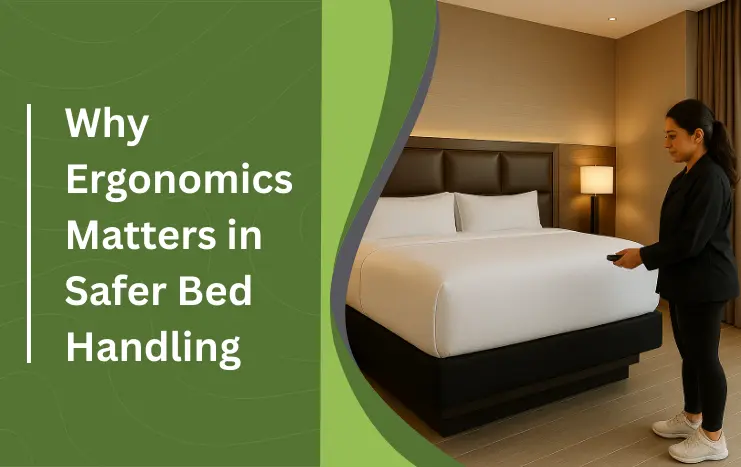
Housekeepers will no longer need to bend down to lift the mattress at the edges and corners, as they will now have a stable, elevated bed that is at waist height. The use of a raised bed reduces the time spent bending, stretching, and holding uncomfortable positions, thereby allowing a housekeeping attendant to relieve some of the fatigue associated with repetitive motion while preparing and cleaning a guest room.
Types of Bed Lift Systems Used in Hotels
Hotels can typically choose ergonomic bed lift solutions, depending on property size, workload, and infrastructure:
Electric-Powered Atkinson BedLift
The Electric-Powered Atkinson BedLift uses a powered mechanism activated by a remote button to raise and lower the bed smoothly.
Best suited for:
- Large or high-occupancy hotels
- Properties with heavier mattresses and frequent room turns
- Operations focused on maximum consistency and ease of use
Key advantages:
- Fully powered operation with minimal physical effort
- Consistent lift height for all staff members
- Ideal for daily, high-volume bed handling routines
Spring-Assisted Atkinson BedLift
The Spring-Powered Atkinson BedLift use counterbalanced tension to assist lifting, requiring only light input from the user.
Best suited for:
- Boutique and mid-size hotels
- Properties seeking a non-electric solution
- Retrofits where wiring access is limited
Key advantages:
- No electricity required
- Significantly reduced effort compared to manual bed handling
Key ergonomic benefits include:
- Reduced repetitive bending during sheet changes and under-bed cleaning
- Improved posture by allowing staff to work at waist height
- Less awkward reaching and twisting when tucking corners or inspecting areas
- Lower fatigue over the course of a shift, supporting steadier performance
Because the bed is elevated in a stable, controlled manner, housekeepers can complete bed-making tasks more comfortably and consistently—without relying on strength or individual lifting technique.
Why Ergonomics Matters in Hotel Housekeeping
Better ergonomics protect staff well-being, support consistent performance, and strengthen daily operations.
Poor ergonomics doesn’t just affect physical comfort; it impacts productivity, morale, and operational reliability. When tasks require excessive bending or force, fatigue builds faster, quality can vary, and experienced staff are harder to retain.
Ergonomic improvements help hotels by:
- Supporting long-term staff comfort and reducing fatigue-related strain
- Maintaining consistent cleaning quality throughout the shift
- Stabilizing daily workflows, especially during high-occupancy periods
- Demonstrating a proactive safety approach aligned with OSHA ergonomic guidance
Unlike training alone, ergonomic equipment addresses risk at the source—by changing how the task is performed, not just how employees are told to perform it.
Conclusion
Manual Bed Handling while making Beds is one of the most arduous and repetitive physical tasks in Hotel Housekeeping. Without proper Ergonomic considerations, it contributes to fatigue, discomfort, and long-term strain. Ergonomic solutions—especially the Atkinson BedLift—offer a practical way to reduce bending, improve posture, and support staff well-being without changing room layouts or cleaning standards.
The Atkinson BedLift is designed specifically for hotel environments, raising beds to an ergonomic working height and helping housekeeping teams perform bed-making tasks more comfortably and efficiently.
Looking for safer alternatives to manual bed handling? Discover ergonomic bed lifting solutions designed to protect housekeeping staff and improve daily workflows.
Frequently Asked Questions
Because it involves frequent bending, reaching, and handling mattress edges in tight spaces, repeated many times per shift.
No. They support bed handling by raising the bed to a better working height, reducing strain during routine handling.
Yes, the Atkinson BedLift is designed to fit standard hotel bed frames.
Many hotels see immediate improvements through easier bed-making, steadier workflows, and reduced staff fatigue.
Disclaimer: Ergonomics data from OSHA hospitality guidelines and industry research. Individual results vary by implementation. Consult the manufacturer for specific system specifications.