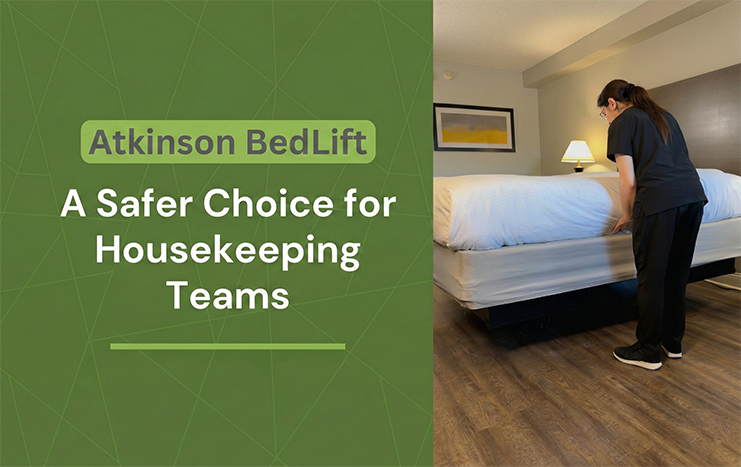
The hotel’s housekeeping staff has to perform some of the toughest physical tasks in the service industry. During each shift, they have to manually lift heavy mattresses (often more than 100 pounds) an average of two to three times, which creates an enormous physical strain on their bodies. Manual bed handling is currently known as one of the primary contributors to musculoskeletal disorders (MSDs) among housekeepers, and an electric bed lifting system has been specifically designed to eliminate that risk.
This reference guide will help hoteliers make educated decisions regarding electric vs. manual bed lifting systems in order to select the safest, most effective, and financially feasible option for their long-term operations.
Why Bed Lifting Systems Matter in Hotels
Bed handling is one of the most physically demanding, most repetitive housekeeping tasks—and the system you choose directly affects safety, speed, and operating costs.
Industry research consistently shows that housekeeping staff experience high rates of lower-back, shoulder, wrist, and neck discomfort, with bed making and mattress handling among the primary contributors. Compared to many other service industries, accommodation services report significantly higher MSD rates due to repetitive manual tasks performed under time pressure. (Source: Hospitality Industry Ergonomics Guide)
Manual Bed Handling in Hotels: How It Works and the Hidden Risks
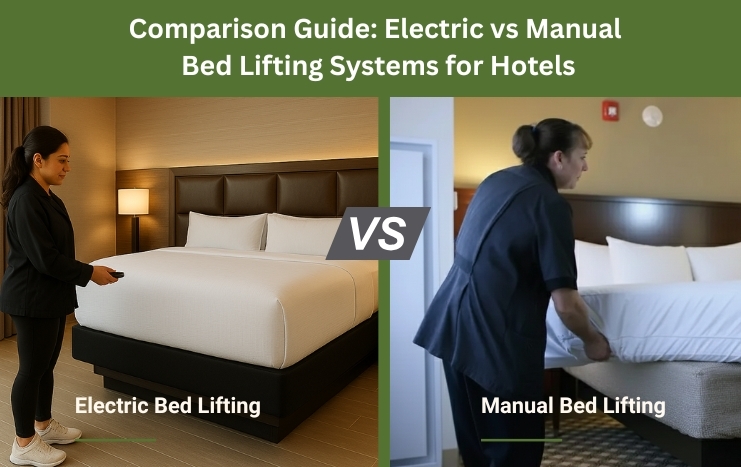
Manual lifting of a mattress corners relies on strength and technique, creating an injury risk and operational drag that compounds over time. With manual bed handling, housekeepers must physically tilt or lift mattress edges to tuck linens or clean beneath the bed—often while bending, twisting, and reaching in tight spaces. These movements are repeated dozens of times per shift.
Over a period of time, this results in:
- Worker Injury Risk: back strain, shoulder and neck pain; Wrist and Hand Conditions (Tendonitis) due to repetitive motion and force generation on the job.
- Workers’ Compensation Exposure: MSD-related claims continue to be one of the top types of claims for the hospitality and restaurant industries, both in the number of claims filed and their associated cost.
- Reduced productivity: My research shows that as fatigue accumulates through a shift, room turnover rates decrease.
- Staffing strain: Injured or restricted workers increase pressure on remaining staff, accelerating burnout
OSHA and State Level Regulatory Agencies are putting increasing emphasis on the elimination and/or re-engineering of high force tasks from the workplace. Training employees on “Safe Lifting Techniques” will help, but they will always have limitations associated with Manual-Only Lifting Approaches.
How Manual Bed Lifting Increases Housekeeping Cost in Hotels
Electric Bed Lifting Systems: How They Work and Core Benefits
Electric systems use powered lifting to improve safety, consistency, and efficiency across housekeeping operations. The Electric Bed Lifting System is a device mounted under the bed frame and serves to raise and lower the entire bed, including the mattress, at the push of a button.
- When using the system, the operator will generally use a foot switch, wall switch, or hand-held remote.
- The operator will raise the bed up to a level that is supportive and ergonomically appropriate for cleaning, linen changing or housekeeping duties, and will lower the bed to its original position for the guest’s use.
The Electric Bed Lifting System has many key benefits:
- Less chance of injury: No manual lifting will occur during one of the most dangerous tasks associated with housekeeping.
- Increased speed of service: By providing better access to clean linens, the time to clean under a bed is greatly reduced.
- Better quality of service: Every time a bed is made or cleaned, it will be done the same way, eliminating the chance of missing areas due to physical limitations.
- Ergonomic alignment: The Bed Lifting System complies with recommended engineering controls to enhance the health and safety of housekeepers and other employees within the hospitality industry.
- Wide-ranging uses: The system can be used in budget, mid-scale and luxury hotels with a variety of bedding ranges.
Electric vs Manual Bed Lifting Systems
Electric systems outperform manual lifting in safety, efficiency, compliance, and long-term ROI.
| Criteria | Electric Bed Lifting | Manual Lifting |
| Safety | Removes heavy lifting; significantly lowers MSD risk | High risk from repetitive bending and load handling |
| Efficiency | Faster, predictable bed tasks | Slower as fatigue builds |
| Cost Impact | Long-term savings through labour efficiency and fewer claims | Hidden costs from injuries, overtime, and downtime |
| Training | Simple equipment orientation | Ongoing “safe lifting” training that still strains staff |
| Guest Experience | Faster readiness and consistent under-bed cleaning | Inconsistent cleaning of hard-to-reach areas |
| Long-Term Outlook | Strong ROI as labour and safety costs rise | Increasingly difficult to justify as mattresses get heavier |
Compliance and Employee Retention Advantages
Electric systems support regulatory alignment and create more sustainable housekeeping roles.
OSHA guidance for hospitality emphasizes minimizing manual handling of heavy, repetitive tasks. Electric bed lifting systems directly support this by removing forceful exertion from daily workflows.
Additional advantages include:
- Lower insurance and legal exposure through reduced injury risk
- Improved job sustainability, helping retain experienced staff
- Reduced turnover costs, a major issue in housekeeping departments
A safer role is not just a compliance benefit—it is a workforce stability strategy.
Final Verdict: Which Should Hotels Choose?
Electric bed lifting systems are the safer, more efficient, and more future-proof choice for most hotels.
Manual bed handling is becoming harder to justify as:
- Mattresses continue to get heavier
- Safety expectations increase
- Labor becomes more expensive and difficult to replace
Electric bed lifting systems align with the direction hotel operations are moving:
- Less physical risk for staff
- More predictable cleaning schedules
- Fewer disruptions from injuries and absenteeism
For most hotels—particularly those with moderate to high room counts—electric systems represent the strongest long-term operational investment. Solutions like Atkinson BedLift allow properties to modernize housekeeping without replacing existing beds.
Frequently Asked Questions
Because it combines heavy force, awkward postures, and repetition—exactly the factors that drive MSDs in hospitality.
Yes. By removing manual lifting, they significantly reduce exposure to the high-risk movements identified in injury-prevention guidance
No. While larger properties may see faster ROI, any hotel struggling with mattress weight and staff fatigue can benefit.
No. Training focuses on the safe operation of simple controls and is typically much shorter than ongoing “safe lifting” instruction.
They enable faster, more consistent cleaning—including under-bed areas—reducing complaints and improving overall room quality.