Housekeeping staff are among the most physically active employees in the hotel business. The daily duties of a housekeeping employee include continuous bending, reaching, twisting, and partially lifting 80–120 pound mattresses more than one time per room during each work shift. Chronic pain and fatigue resulting from extended periods of heavy physical work can develop chronic musculoskeletal disorders (MSDs), especially in the back and shoulder areas, over a period of time.
Compared with many other service roles, hospitality workers experience significantly higher injury rates, with housekeeping consistently identified as one of the most affected groups. Hotel bed lifting systems have emerged as a proven ergonomic solution, eliminating manual mattress lifting and helping protect staff while also improving cleaning efficiency and operational consistency. This guide explains how these systems safeguard housekeeping teams in daily hotel operations.
How Atkinson BedLifts Protect Housekeeping Staff
The Atkinson BedLift is a bed lifting system designed to remove the physical burden of mattress handling, promote neutral posture, and create safer, repeatable workflows for all staff.
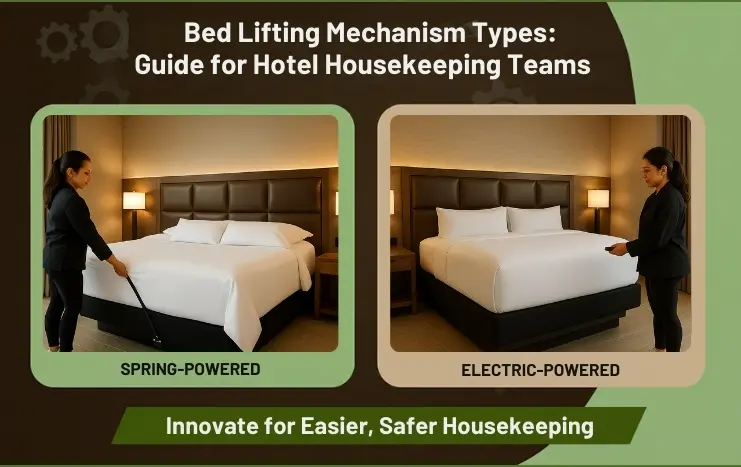
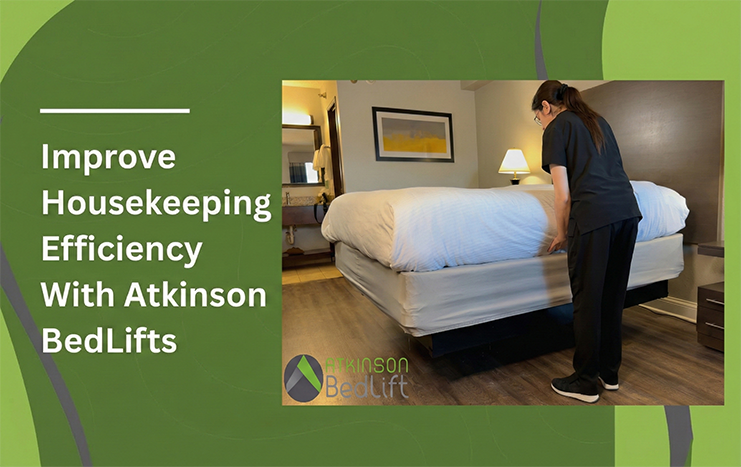
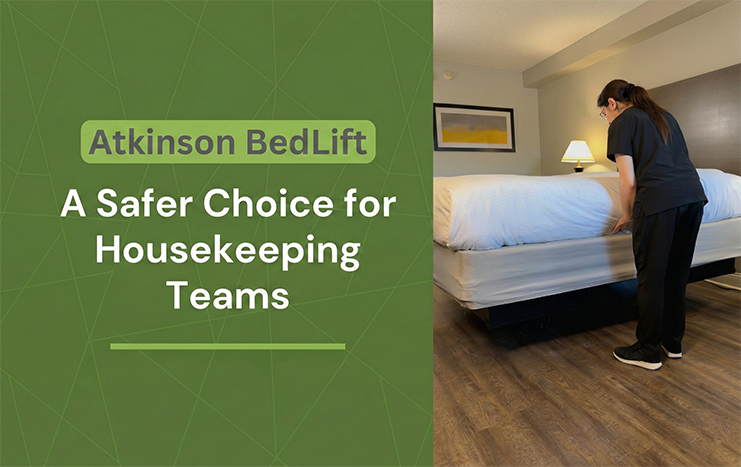
Hotel bed lifting systems are installed beneath existing bed frames and raise the entire bed—mattress included—to a comfortable working height using a remote or key. This removes the need for manual lifting of mattresses and reduces the physical stress associated with bed-related tasks.
Key ways Atkinson BedLifts support staff safety and comfort:
1. Eliminate heavy mattress lifting
Mechanical elevation replaces physical exertion, removing one of the most demanding tasks from daily housekeeping routines.
2. Support a neutral working posture
Waist-height access minimizes deep bending, reaching, and twisting during bed making and frame cleaning.
3. Reduce repetitive joint strain
Controlled lifting motion helps limit the awkward movements and forceful actions that contribute to wrist, elbow, and shoulder discomfort.
4. Provide stable, predictable operation
Secure locks and vertical movements provide safety and predictability. These reduced accidents and hazards prevent slips, tipping or uneven lifting due to manual lifting methods.
5. Improve under-bed access without floor-level strain
Raised beds make vacuuming, inspection, and debris removal easier—without crawling, kneeling, or excessive reaching.
6. Provide equal protection to all employees
The way that this system protects is consistent throughout all users (height, strength, experience, etc.); therefore, it is not based upon a person’s physical ability.
Together, these factors create a safer and more sustainable working environment across every shift.
Conclusion
Housekeeping teams are physically challenged through manual bed handling that adds additional strain to their bodies, causing fatigue and discomfort with an increased risk of long-term injury. It also leads to slower daily operations. Atkinson BedLifts have alleviated that strain by converting one of the most strenuous tasks for Housekeeping into an ergonomic, controlled manner.
More than a safety upgrade, these systems support healthier working conditions, more consistent cleaning performance, and reduced operational disruption. For hotels focused on staff well-being, efficiency, and long-term sustainability, bed lifting systems are becoming essential infrastructure—not optional equipment.
Looking to strengthen housekeeping safety at your property?
Explore how hotel bed lifting systems can protect your staff and streamline daily workflows. Request your Atkinson BedLift assessment today.
Frequently Asked Questions
They primarily reduce back, shoulder, neck, and wrist strain associated with manual mattress handling and repetitive bed-making movements.
Benefits are immediate, as manual lifting stops on Day 1. Over time, reduced fatigue and strain support more consistent performance.
Yes. They directly address recommendations to minimize forceful exertion and awkward postures in housekeeping tasks.