Housekeeping staff in hotels are probably the most physically demanding employees in the hospitality industry. They use their bodies to complete many different tasks throughout each workday, performing numerous bending, lifting, pushing, and reaching movements during each of these workdays, all of which contribute to the overall physical demands of working in hotels.
Due to the way in which housekeeping staff move their bodies while working (e.g., making beds, lifting and carrying heavy carts filled with supplies, and cleaning areas that are either too low to reach comfortably or too high to reach without stretching), these repetitive movements create stress on the body that over time will lead to musculoskeletal disorders (MSD), increased absenteeism, and employee turnover, leading to increased costs associated with operating hotels.
Investing in an ergonomic way can help hotels reduce their injury rates and improve the speed and effectiveness of cleaning, as well as allow them to retain experienced housekeeping staff and maintain a more sustainable, environmentally friendly housekeeping operation.
What Is Ergonomic Equipment in Hotels?
Ergonomic equipment is designed to support natural posture and reduce force, repetition, and fatigue during daily housekeeping tasks.
In hotel environments, ergonomic equipment refers to tools and systems specifically designed to fit the worker and the task, rather than forcing workers to adapt their bodies to inefficient tools. Instead of relying solely on “safe lifting” training, ergonomics focuses on changing the equipment itself so it absorbs strain and reduces physical effort.
Ergonomic considerations are especially important in tasks such as:
- Bed making and mattress handling
- Pushing fully loaded housekeeping carts
- Mopping, dusting, and cleaning high or low surfaces
- Handling heavy linen bags and laundry loads
Hospital housekeeping ergonomics guidance consistently emphasizes evaluating both work processes and equipment, recommending mechanical aids and adjustable tools to reduce MSD risk and cumulative fatigue.
Top 5 Ergonomic Equipment Every Hotel Should Invest In
1. Atkinson BedLift (The Highest-Impact Investment)
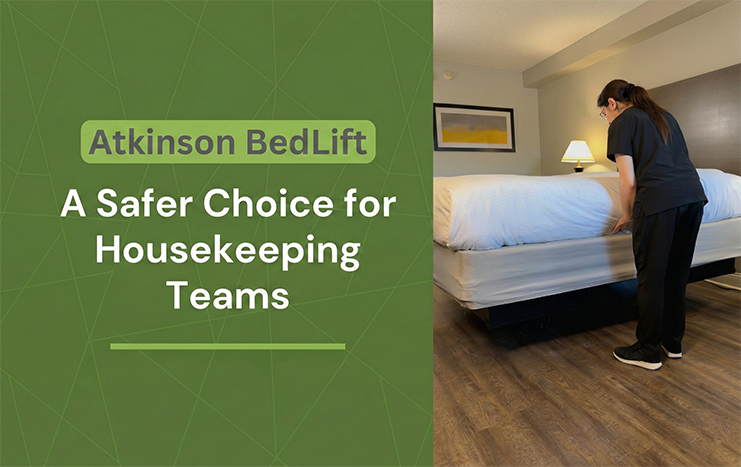
The two models of the Atkinson BedLift are bed lifting systems designed to remove one of the heaviest and most injury-prone housekeeping tasks—manual mattress edge lifting—delivering unmatched safety and efficiency benefits.
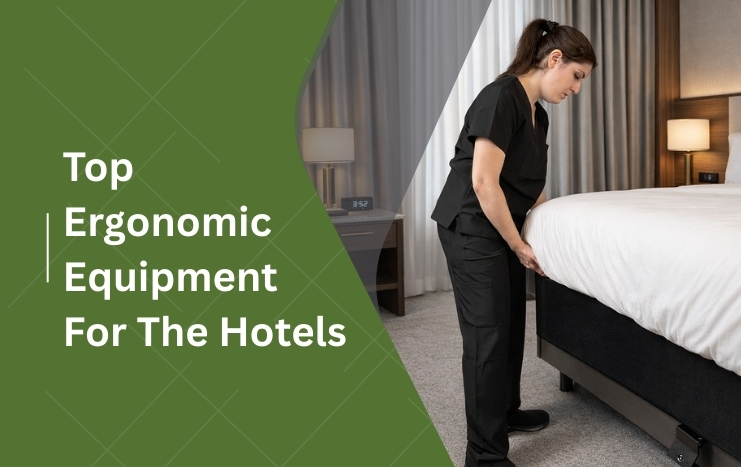
Housekeepers carry out bed making and mattress handling tasks as two of the most physically intensive jobs, with a high correlation to back-related injuries and shoulder injuries from lifting mattresses. The use of a Bed Lifting System will ease the amount of burden placed on individuals by allowing for the raising of the entire bed frame through the lift system, thus relieving the need to lift or tilt an entire mattress manually.
Key ergonomic benefits include:
- The reduction of back and shoulder strain: Due to mechanical lifting being able to replace strenuous manual lifting, which is a direct contributor to a large number of MSDs experienced in hotels.
- Improved access to the space underneath and around the bed: Because the bed is elevated, it is easier to vacuum, dust and inspect underneath the bed.
- More predictable cleaning routines: Because lifting effort is removed, under-bed cleaning is less likely to be skipped when staff are tired or pressed for time.
Compared with other ergonomic tools, bed lifts address a high-risk, high-frequency task performed in every guest room, which is why their ergonomic return on investment often exceeds that of carts, mops, or mats over time.
What Is a Bed Lift System? Complete Guide for Hoteliers
2. Ergonomic Housekeeping Carts
Well-designed carts reduce pushing force, awkward posture, and unnecessary strain while improving workflow efficiency.
Housekeepers frequently push heavily loaded carts over long distances and uneven surfaces. Poorly designed carts can strain the back, shoulders, and wrists.
Ergonomic carts typically feature:
- Adjustable handle heights to support neutral wrist and shoulder positioning
- Balanced weight distribution and low-resistance wheels to reduce push force
- Organized storage that keeps heavier items at waist height rather than on the floor or overhead
These carts support smoother movement across corridors and align with ergonomic guidance that encourages minimizing pushing and pulling forces in hospitality environments.
3. Lightweight, Adjustable Cleaning Tools
Cleaning tools that are lightweight and adjustable make cleaning tasks easier, and they increase employee comfort during these tasks by preventing excessive bending and overreaching. Conventional cleaning equipment, such as brooms, mops and dusters, can force employees into uncomfortable positions because they are designed with set lengths. Staff may utilize ergonomic cleaning equipment that includes:
- Extensible handles, which allow them to clean underneath furniture and over high surfaces without having to use poor posture while cleaning.
- Lightweight materials allow for less fatigue in the arms and shoulders due to repetitive motions.
Housekeeping ergonomic research confirms the need for long-handled and adjustable cleaning tools to decrease the amount of excessive bending and overhead lifting, two primary causes of MSDs (musculoskeletal disorders).
4. Height-Adjustable Linen Handling Equipment
Lift-assisted linen bins and tables reduce repeated bending and heavy lifting in laundry workflows.
Linen handling—from stripping beds to loading carts and laundry bins—often involves frequent bending and lifting of heavy fabrics. Height-adjustable solutions such as:
- Scissor-lift linen carts
- Spring-bottom laundry bins
help keep loads at a comfortable working height, reducing stress on the lower back and knees. Studies consistently identify laundry and linen handling as a significant contributor to housekeeping-related back pain, making this an important ergonomic focus area.
5. Anti-Fatigue Mats for Back-of-House Areas
A simple, low-cost way to reduce standing fatigue in laundry and supply areas.
Housekeeping and laundry staff often stand for extended periods while folding linens, sorting supplies, or operating machines. Anti-fatigue mats:
- Cushion joints on hard floors
- Reduce leg and lower-back fatigue
- Improve overall comfort during stationary tasks
Ergonomics guidance notes that prolonged standing on hard surfaces contributes to discomfort and long-term lower-limb strain, making mats a practical improvement for back-of-house areas.
How Ergonomic Equipment Supports Hotel Operations
Increased employee wellbeing through better ergonomics allows for improved consistency in hotel cleaning and operational dependability, thus leading to decreased employee injury rates. Ergonomically designed equipment will improve hotel operations in several ways:
- Improved comfort and morale of employees will reduce employee burnout and turnover.
- Greater consistency in cleaning quality and inspection results.
- Greater speed of cleaning is able to improve the speed of turnover and check-in operations.
- Ergonomically designed equipment will demonstrate a company’s proactive safety-conscious approach and help meet OSHA requirements as well as insurance company criteria.
As a result, these items all have a direct influence on guest satisfaction and operational stability.
Housekeeping Safety: How BedLifts Help to Meet OSHA and ADA Compliance
Conclusion
Ergonomic equipment is no longer optional in hotel housekeeping—it is essential for reducing injury risk, maintaining cleaning standards, and operating efficiently in a labor-constrained environment.
Hotels that invest strategically in ergonomics are better positioned to protect their teams, stabilize operations, and deliver consistent guest experiences.
Looking to improve housekeeping safety and efficiency? Explore ergonomic solutions designed specifically for hotel operations.
Frequently Asked Questions
Housekeepers perform repetitive, forceful tasks involving awkward postures—such as bed making, cart pushing, and overhead cleaning—which are strongly associated with MSDs.
Absolutely. Even modest investments—such as spring-assist bed lifts, ergonomic carts, or adjustable tools—can significantly reduce strain and improve efficiency for smaller teams.
Track injury reports, staff feedback, room cleaning times, overtime usage, and turnover before and after implementation.
Yes. OSHA, Cal/OSHA, and hospitality ergonomics resources provide task-specific recommendations, including mechanical aids for beds, carts, and cleaning tools.