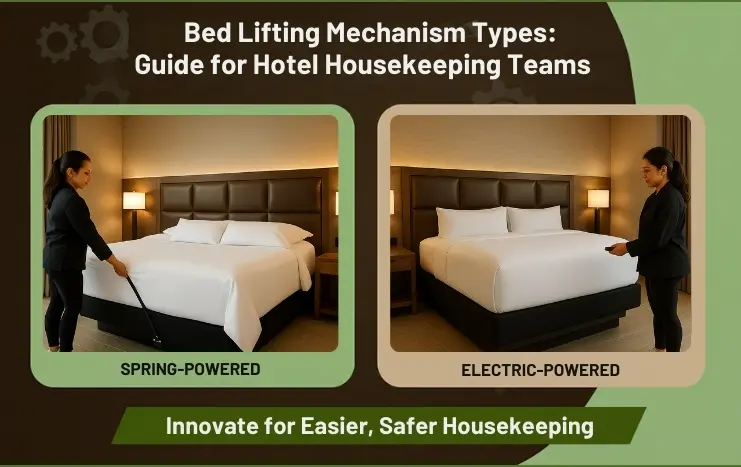
Why Compliance Matters in Housekeeping
Housekeeping is one of the jobs in the hospitality industry that is most likely to cause injuries. There are OSHA and ADA standards in place to lower these risks, keep workers safe, and make workplaces safer. Following these rules isn’t just about avoiding fines; it also boosts morale, keeps employees, increases productivity, and improves overall performance.
Use ergonomic tools like the Atkinson BedLift to modernize housekeeping tasks. This will not only meet regulatory standards, but it will also make the work environment healthier and safer. (Source: CCOHS)
Understanding OSHA and ADA Standards for Housekeeping
OSHA Requirements
OSHA’s housekeeping advice is mostly about how to avoid ergonomic hazards. Some important things to expect are:
- Teaching safe lifting techniques
- Using ergonomic tools that reduce strain
- Reducing the amount of bending that happens over and over again
- Keeping work areas clean and free of obstacles
According to Section 5(a)(1) of the OSHA General Duty Clause, employers must make sure that the workplace is “free from recognized hazards.” Musculoskeletal disorders, which are one of the most common injuries among room attendants, are one of these hazards.
ADA Considerations
The Americans with Disabilities Act (ADA) requires maintaining workspaces that:
- Are accessible to staff of different abilities
- Reduce unnecessary barriers
- Provide reachable, safe working heights
- Support workers regardless of stature, mobility, or physical limitations
Ergonomic, height-adjustable equipment—such as the Atkinson BedLift—helps hotels support ADA principles by reducing excessive physical exertion.
How AtkinsonBedLift Supports OSHA and ADA Compliance
The Atkinson BedLift directly addresses compliance by integrating ergonomic and accessibility features into one tool.
Key Compliance-Supporting Features
1. Eliminates Manual Mattress Corner Lifting
Housekeepers frequently lift mattress corners and edges, not entire beds, causing repetitive strain on the back, shoulders, and wrists.
The Atkinson BedLift raises the entire bed assembly to a comfortable height, reducing the bending and awkward postures that OSHA identifies as high-risk ergonomic hazards.
2. Provides a Consistent, Adjustable Working Height
Supports workers of different heights and abilities—an ADA-aligned best practice—by creating an accessible, waist-level working surface.
3. Cuts down Bending, reaching, and twisting
Focuses on the most common types of injuries that housekeepers get, such as:
- Strain on the back
- Tired shoulders
- Too much work on the wrist
Providing the right ergonomic tools is OSHA’s best practice, and the Atkinson BedLift helps to meet that standard. (Source: Cal/OSHA)
Real-World Benefits of Compliance-Focused Equipment
Using equipment that is compliance-ready, like the Bed Lift, will direct impact positively on both your operations and bottom line.
✔ 35% less of all injuries from strain
(Cal/OSHA statistics showing prevention of Musculoskeletal Injuries)
✔ Increased morale and increased retention of your staff.
Enhanced wellness in your staff allows for reduced absenteeism and increased job satisfaction.
✔ Enhancement of readiness for inspections.
Proactive ergonomic practices allow OSHA and labor inspectors to perform their functions with less risk.
✔ Increase in guest satisfaction.
Guest experience scores improve with regular cleaning schedules and decreased turnover.
Compliance becomes not just a requirement—but a competitive advantage. (Source: OSHA housekeeping checklist)
To Conclude
In order to operate at maximum efficiency, hotels must comply with OSHA and ADA Housekeeping standards because it reduces injuries and costs incurred by injuries. Atkinson BedLift offers a solution that provides an ergonomic support system that also supports the accessibility needs of your housekeeping teams while maintaining a safe work environment for all employees.
Are you ready to improve safety and compliance?
Contact Atkinson BedLift for a demo and an evaluation of how well you follow the rules.
Frequently Asked Questions
Safe lifting, ergonomic tools, minimizing repetitive strain, and maintaining hazard-free work areas.
It reduces repetitive bending and manual mattress corner lifting—two major contributors to musculoskeletal injuries.
ADA requires accessible, barrier-free work environments that accommodate staff with different abilities.
Yes. Reducing repetitive strain injuries lowers claims, downtime, and insurance exposure.
Absolutely—ergonomic equipment makes it easier to demonstrate proactive OSHA compliance.